
Ecommerce Link Building - Strategies, Risks & Best Practices
I've spent years helping online stores climb the SERPs, and one thing I know for sure: ecommerce link building isn't about buying links or spamming directories. It's about earning real, editorial backlinks that make Google trust your product pages and category pages. I've seen too many shop owners burn budget on risky tactics that backfire. Let me show you what actually works from the trenches of Amsterdam's ecommerce scene.
This guide will help you decide which link building strategies fit your store's niche and risk tolerance. You'll learn how to spot the difference between a sustainable digital PR campaign and a shady link scheme, plus get a clear roadmap for building links that drive rankings without getting penalized.
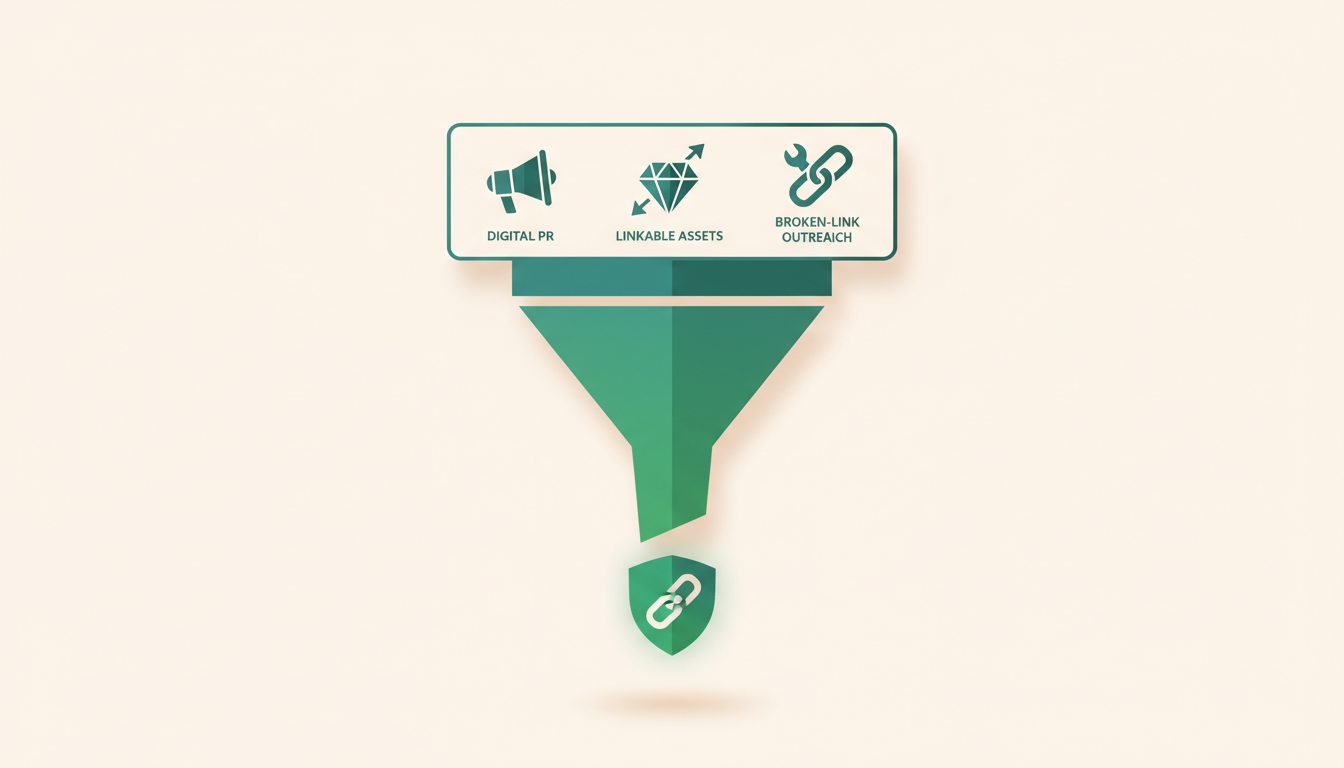
At a glance
- Best Tactics
- Digital PR, linkable assets, broken-link outreach
- Typical Cost
- Moderate (content production, outreach labor)
- Risk Level
- Low to moderate (if ethical)
- Common Link Sources
- Suppliers, affiliates, reviews, stockists, product mentions
- Key Tools
- Ahrefs, Semrush for broken-link and mention prospecting
What Is Ecommerce Link Building?
Ecommerce link building is the practice of earning backlinks to an online store to improve the authority and rankings of product, category, and content pages. Unlike generic link building, it focuses on tactics that fit the commercial nature of ecommerce, such as supplier links, product reviews, and resource page citations.
Effective ecommerce link building requires a balance of creativity, relevance, and ethical practices to avoid penalties. I've seen stores waste months on bulk guest posting that produced nothing but low-quality referring domains. The stores that win are the ones that treat link building as a strategic investment, not a numbers game.
How Ecommerce Link Building Works
Ecommerce link building involves identifying pages that can realistically earn links, such as guides, comparisons, tools, or promotions. These assets are then promoted to relevant publishers, partners, and niche blogs.
- Prospect link sources: Editorial sites, niche blogs, resource pages, suppliers, partners, reviewers, and brand-mention opportunities.
- Create linkable assets: Tools, calculators, research, and evergreen content.
- Outreach: Personalized pitches to publishers and partners.
I usually start with unlinked brand mentions because they are the lowest-hanging fruit. Then I move to supplier and partner links, which often require nothing more than a polite email. Only after that do I invest in linkable assets and digital PR.
Effectiveness of Ecommerce Link Building
Ecommerce link building works best when tied to assets people actually want to cite, such as original research, useful tools, or evergreen promotions. Digital PR, niche assets, mention reclamation, broken-link outreach, and partner links consistently outperform generic spammy outreach.
However, it is less effective when treated as a bulk game or tied to low-quality content. I've seen stores spend thousands on guest post networks and end up with links from sites that have zero relevance to their niche. A link from a relevant page with real traffic is usually more valuable than ten links from random directories. That doesn't mean DR is irrelevant — but it should never be your only selection criterion.
For more on how I judge link quality, see How I judge links.
Risks and Common Mistakes
Paid link buying and link exchanges are risky if their primary purpose is to manipulate PageRank. Google's spam policies explicitly target unnatural links. As John Mueller has said, buying links to pass PageRank violates Google's guidelines.
Low-quality guest post networks and mass outreach often produce junk referring domains. Product-review outreach can drift into undisclosed compensation or manipulated endorsements. Ignoring relevance and niche authority leads to low-impact links.
I cover these risks in more detail on my Risk & hats page. The short version: if a tactic feels like a shortcut, it probably is — and shortcuts in link building rarely end well.
Best Practices for Ecommerce Link Building
To maximize effectiveness and minimize risk, follow these best practices:
- Build links to content assets first, then pass authority to money pages with internal links.
- Prioritize relevance over raw domain metrics.
- Reclaim unlinked brand mentions and supplier/partner links before spending on expensive placements.
- Focus on ethical, scalable tactics like digital PR and broken-link outreach.
For a deeper look at the methods I use, see Methods I use and Outreach & PR.
Ecommerce Link Building Tactics Compared
Ecommerce link-building tactics vary widely in use, cost, and risk. Here's a breakdown of common approaches:
For more on buying links and hiring help, see Buying & hiring.
Pros and Cons of Ecommerce Link Building
Pros:
- Improves rankings for category, product, and informational pages when authority is transferred correctly.
- Ecommerce has many natural link sources: suppliers, affiliates, reviews, stockists, and product mentions.
- Strong content assets can earn links repeatedly without paying for every placement.
- Works well for brands with products, data, or seasonal offers worth citing.
Cons:
- Commercial product pages rarely earn links on their own; they usually need supporting content.
- Paid placements and weak guest posting are common budget sinks with thin long-term value.
- Link acquisition can be slow for new stores without brand awareness.
- Many tactics require ongoing outreach, monitoring, and content upkeep.
Pricing and Costs
No single market price exists for ecommerce link building. Costs are driven by content quality, outreach labor, publisher authority, and whether you are buying placements or earning them. In practice, supplier links, unlinked mentions, and broken-link outreach are mostly labor costs, while guest posts, niche edits, and paid placements introduce direct placement fees and higher risk.
If you are considering buying links, read my Buying & hiring page first. I explain what to look for and what to avoid.
Ecommerce link-building tactics by typical use, cost, and risk
Ecommerce link-building tactics vary widely in use, cost, and risk. Here's a breakdown of common approaches:
| Tactic | Best use | Typical cost driver | Risk |
|---|---|---|---|
| Digital PRBest for brands with newsworthy launches, data, or strong stories; usually the highest-quality links. | Brand awareness, editorial links, scalable authority | Creative strategy, outreach, assets, PR labor | Low to moderate if honest; weak if fabricated or spammy |
| Linkable assetsGuides, tools, research, calculators, and comparison content that attract citations over time. | Evergreen link earning, supports category pages via internal links | Content production and promotion | Low |
| Broken-link buildingTargets dead resource pages or dead competitor references and offers a live replacement. | Niche resource pages, replacement opportunities | Prospecting and outreach time | Low to moderate; success rate varies |
Arguments for
- Improves rankings for category, product, and informational pages when authority is transferred correctly.
- Ecommerce has many natural link sources: suppliers, affiliates, reviews, stockists, and product mentions.
- Strong content assets can earn links repeatedly without paying for every placement.
- Works well for brands with products, data, or seasonal offers worth citing.
Arguments against
- Commercial product pages rarely earn links on their own; they usually need supporting content.
- Paid placements and weak guest posting are common budget sinks with thin long-term value.
- Link acquisition can be slow for new stores without brand awareness.
- Many tactics require ongoing outreach, monitoring, and content upkeep.
What the experts say
Buying links to pass PageRank violates Google's guidelines.
What it costs (and why prices are unreliable)
No single market price exists for ecommerce link building. Costs are driven by content quality, outreach labor, publisher authority, and whether you are buying placements or earning them. In practice, supplier links, unlinked mentions, and broken-link outreach are mostly labor costs, while guest posts, niche edits, and paid placements introduce direct placement fees and higher risk.
Frequently asked questions
What is link building SEO?
Link building SEO is the practice of getting other websites to link to yours so search engines treat your pages as more authoritative. In ecommerce, the point is usually to support category and product rankings through stronger site authority.
What are the best ecommerce link building strategies?
The recurring winners are digital PR, linkable assets, unlinked brand mentions, broken-link outreach, and supplier/partner links. Guest posting and reviews still work, but they are secondary tactics.
What are backlinks for an ecommerce website?
They are external links pointing to your store, category pages, product pages, or supporting content. The best ecommerce backlinks usually come from relevant editorial content, partnerships, reviews, and resource pages.
What are some link building examples?
Examples include a supplier linking to your stockist page, a blogger reviewing your product, a journalist citing your research, a site replacing a dead resource link with your guide, or a brand mention being turned into a live backlink.
Is ecommerce link building worth it?
Yes, when done strategically. It improves rankings, drives traffic, and builds authority, but it requires a focus on quality, relevance, and ethical practices.
Sources
Every factual claim on this page is drawn from the following independent sources. Links open in a new tab.
- Neil Patel — Lists ecommerce tactics such as digital PR, linkable assets, permanent promotion pages, brand monitoring, and broken-link building.
- Reporter Outreach — Explains current ecommerce tactics, including PR outreach, broken-link prospecting, competitor replication, unlinked mentions, and internal linking to commercial pages.
- Network Solutions — Describes broken-link discovery and mentions Ahrefs and Semrush as tools for scanning target sites.
- Collaborator — Covers ecommerce tactics, guest-posting workflow, reviewer outreach, affiliate/partner links, supplier links, and the relevance-versus-cost trade-off.
- 1SEO — Supports internal-link architecture and moving authority from high-authority pages to underperforming commercial pages.
- Gelato — Summarizes core ecommerce strategies such as content marketing, guest blogging, influencer collaboration, outreach, and relationship building.
- Editorial.link — Covers broken links, unlinked brand mentions, guest post prospecting, and content promotion methods.
- LinkFlow.ai — Includes competitor link stealing, linkable assets, guest posts, sponsored events, product reviews, and unlinked mention workflows.