
Enterprise Link Building: Strategies, Agencies, and Costs for Large-Scale SEO
I’ve spent years working on enterprise link building campaigns, and the one thing I keep coming back to is this: relevance and editorial quality beat raw link volume every time. Enterprise link building isn’t about collecting as many backlinks as possible—it’s about earning the right links that drive real business value, whether that’s organic traffic, conversions, or brand visibility.
In this guide, I’ll break down the tactics that actually work, how to evaluate agencies and costs, and why chasing vanity metrics like DA/DR without relevance is the fastest way to waste budget. I’ll also share the risks you need to avoid, because one wrong move can undo months of work.
At a glance
- Typical Cost
- $5k–$50k+/month depending on scale
- Timeframe
- 3–12 months for measurable impact
- Key Metrics
- Organic traffic, keyword rankings, conversions
- Highest Risk
- Paid link schemes violating Google’s spam policies
Enterprise Link Building Tactics That Work
In my experience, the most effective enterprise link building combines several scalable tactics rather than relying on a single approach. Here’s what I recommend:
- Digital PR campaigns with newsworthy research, surveys, or data visualizations that journalists want to cover. Outreach and PR done right can earn coverage from top-tier publications.
- Unlinked mention reclamation at scale—systematically finding where your brand is mentioned without a link and converting those mentions. This is low-hanging fruit for established brands.
- Broken link building on high-authority domains, where you replace dead links with your own content. It’s a classic tactic that still works when executed well.
- Linkable assets like proprietary tools, industry reports, and interactive content that naturally attract links. My methods page dives deeper into how to create assets that earn links.
- Strategic guest contributions to relevant publications, but only when the content is genuinely useful and the site is a strong audience match.
Neil Patel’s 2025 enterprise framework emphasizes identifying linkable stories, distributing press releases, and pitching journalists. I’ve found that works well when you have a strong data story to tell.
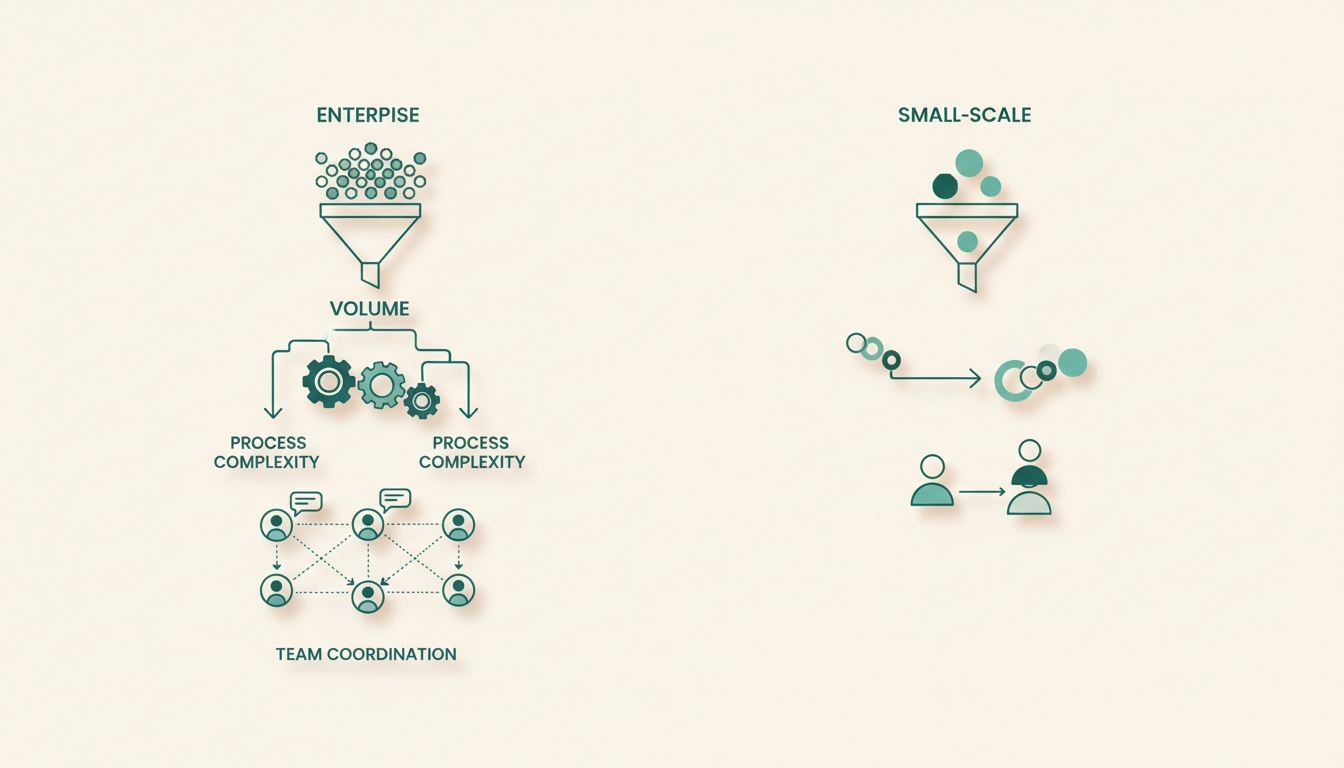
Enterprise vs. Small-Scale Link Building
Enterprise link building looks very different from a small business campaign. The scale, focus, and process are fundamentally different. Here’s a comparison I’ve seen play out in practice:
For a deeper dive into how small-scale link building works, see local link building or B2B link building—those niches often start with smaller budgets before scaling.
How to Evaluate Enterprise Link Building Agencies
When I vet agencies for enterprise link building, I look for more than just case studies. Here’s my checklist:
- Request case studies that show traffic and ranking impact, not just link numbers. How I judge links explains what metrics matter.
- Verify editorial placement standards—no PBNs, no paid link networks. Ask for examples of placements and how they were earned.
- Assess content creation capabilities. Can they produce high-production assets like reports, tools, or interactive content? If not, they’re likely reselling cheap links.
- Check client retention rates. Long-term relationships suggest consistency and results.
- Confirm compliance with Google’s spam policies. Any agency that downplays these is a red flag.
For a broader view of buying link building services, see buying and hiring.
Measuring Enterprise Campaign Success
I track these metrics monthly to evaluate whether an enterprise link building campaign is working:
- Organic traffic to the pages that received links—did it increase?
- Keyword ranking improvements for target terms, especially non-branded queries.
- Conversion rate from earned links, measured via UTM parameters or assisted conversions in analytics.
- Assisted conversions in Google Analytics, showing how links contributed to the sales funnel.
- Domain authority growth as a secondary metric—it’s useful for trend tracking but not a primary KPI.
Siteimprove’s enterprise scoring framework suggests tying link value to pipeline and assisted revenue. I’ve adopted that approach and found it aligns SEO with business goals. My tools page lists the software I use for tracking.
Risks and Pitfalls to Avoid
Enterprise link building carries real risks, especially if you cut corners. Here are the biggest ones I’ve seen:
- Paid link schemes and link farms violate Google’s spam policies. As John Mueller has said, “Buying or selling links that pass PageRank can lead to manual actions.” My risk page explains the types of penalties.
- Low-quality marketplace packages that sell volume instead of relevance. These waste budget and leave a noisy backlink profile that’s hard to clean up.
- Over-optimizing anchor text at scale—it looks unnatural and can trigger algorithmic filters.
- Buying links from irrelevant sites damages brand fit and usually underperforms compared with editorial placements.
- Poor agency coordination across content, PR, outreach, and reporting can waste months of effort.
Google’s spam policies are clear: links that are bought or sold for ranking purposes are not allowed. Stick to earned editorial links whenever possible.
Enterprise Link Building Costs and Pricing
Enterprise link building pricing is almost always custom. In my experience, costs are driven by several factors:
- Content production—high-quality reports, tools, or interactive assets cost more than simple blog posts.
- Editorial placement difficulty—getting links from top-tier publications is more expensive than niche sites.
- Outreach labor—skilled outreach specialists command higher rates.
- PR support—digital PR campaigns often require PR agency involvement.
- Type of provider—white-label fulfillment vs. managed strategy agency.
Commodity marketplace links are cheaper but carry materially more risk. Premium editorial placements and digital PR are priced by campaign, retainer, or placement difficulty, not a fixed public rate. Expect to invest $5k–$50k+ per month for a meaningful enterprise program. For a comparison of different service types, see the table below.
Pros and Cons of Enterprise Link Building
After running multiple enterprise campaigns, here’s my honest assessment of the upsides and downsides:
Pros:
- Produces durable rankings with relevant, editorially earned links that compound over time.
- Scales authority across many pages, not just the homepage.
- Creates compounding value when tied to PR and content—brand visibility as a side effect.
Cons:
- Slower than buying cheap links due to quality outreach and PR timelines.
- Expensive, especially for enterprise brands in crowded niches.
- Hard to scale without process, tools, and stakeholder alignment.
- Agencies may oversell vanity metrics over business impact—vet carefully.
For related niches, see SaaS link building or ecommerce link building—the principles are similar but the scale differs.
Enterprise Link Building Services Comparison
Key differences in enterprise link building service types:
| Service Type | Best For | Typical Cost | Risk Level |
|---|---|---|---|
| Digital PREarned media placements | Brands with newsworthy assets | $10k-$50k/month | Low |
| Content-Led OutreachLinkable assets + targeted outreach | Resource-rich organizations | $5k-$20k/month | Medium |
| Unlinked Mention ReclamationSystematic brand mention conversion | Established brands | $3k-$10k/month | Low |
Arguments for
- Produces durable rankings with relevant, editorially earned links
- Scales authority across many pages, not just a homepage
- Creates compounding value when tied to PR and content
- Builds brand visibility as a side effect
Arguments against
- Slower than buying cheap links due to quality outreach and PR
- Expensive for enterprise brands in crowded niches
- Hard to scale without process and stakeholder alignment
- Agencies may oversell vanity metrics over business impact
What the experts say
Buying or selling links that pass PageRank can violate Google's spam policies. Focus on earning links through quality content.
What it costs (and why prices are unreliable)
Enterprise link building is usually custom-priced. In practice, costs are driven by content production, editorial placement difficulty, outreach labor, PR support, and whether the provider is selling white-label fulfillment or managed strategy. Commodity marketplace links are cheaper but carry materially more risk; premium editorial placements and digital PR are priced by campaign, retainers, or placement difficulty, not a fixed public rate.
Frequently asked questions
What's the minimum budget for enterprise link building?
Most effective programs start at $5k/month. Below this, campaigns typically lack the content production and outreach scale needed for enterprise impact.
How long until we see results?
Initial links may appear in 30–60 days, but measurable traffic impact typically requires 3–6 months of consistent effort.
Can we combine in-house and agency efforts?
Yes. Many enterprises use agencies for scalable tactics like digital PR while handling relationship-based link building internally.
What's the biggest waste in enterprise link building?
Chasing vanity metrics (DA/DR) without relevance. A link from an irrelevant high-DA site often provides less value than a relevant mid-authority link.
How do we avoid Google penalties?
Focus on earning editorial links, avoid paid placements, and regularly audit your backlink profile using professional tools like those on my tools page.
Sources
Every factual claim on this page is drawn from the following independent sources. Links open in a new tab.
- Neil Patel — Enterprise framework and digital PR steps: linkable stories, press releases, journalist outreach, exclusives.
- Digital Olympus — Enterprise prospecting emphasis on high-authority, relevant sites.
- Editorial.Link — Audience-match relevance and reduced emphasis on DR-only thinking.
- Search Royals — Unlinked mentions, broken links, internal procedures, audits, and phased scaling.
- Linkbuilder.io — Need for teams, tools, SOPs, and enterprise-scale operations.
- Resolve — Competitor analysis, unlinked mentions, broken links, digital PR, guest posting.
- Siteimprove — Scoring framework, business value measurement, reporting tied to pipeline and revenue.
- Google Search Central — Spam policy risk for buying or selling links that pass PageRank.