
Google AI Overviews: What They Are, How They Work, and SEO Implications
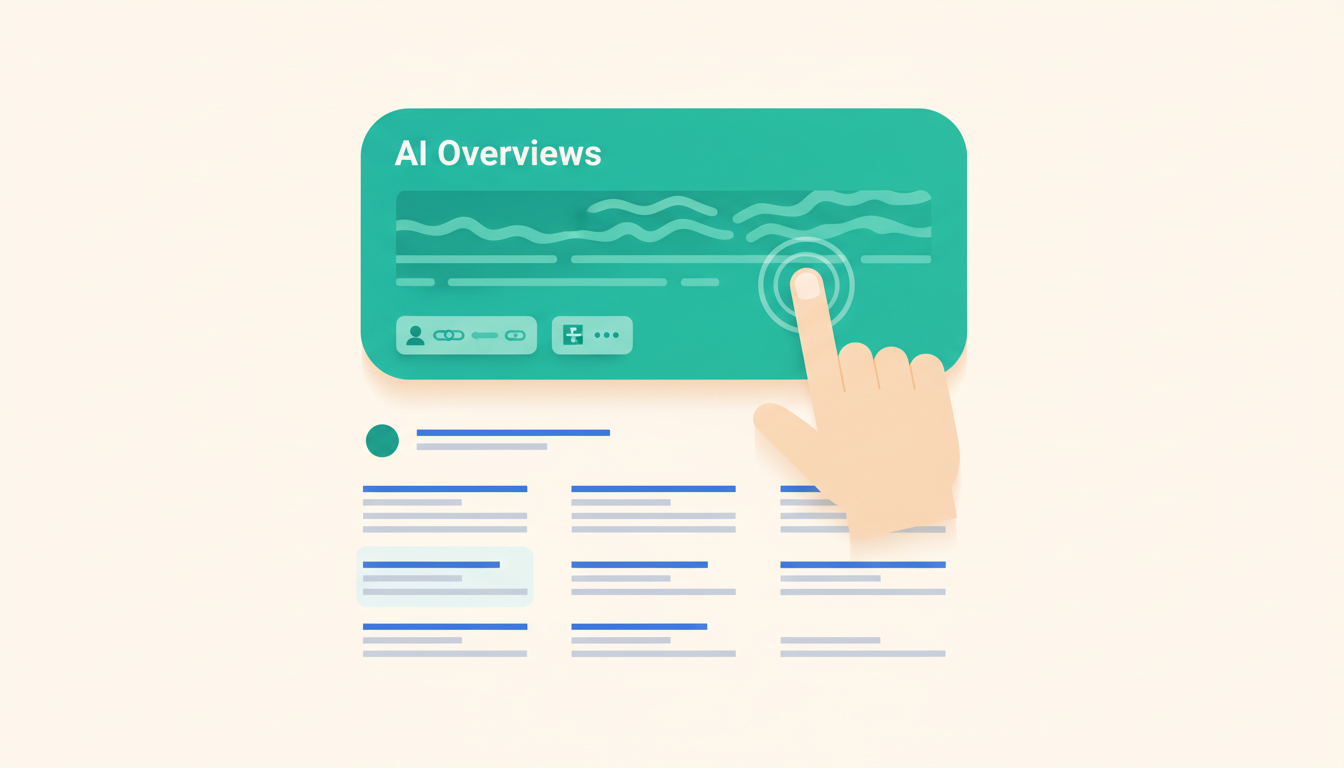
Google AI Overviews are AI-generated summaries that appear at or near the top of Google Search for some queries, with links to sources underneath or alongside the answer. They matter because they can capture attention before organic results and change how clicks flow from search.
This page covers what Google AI Overviews are, how they work, their SEO impact, and best practices for optimizing content to be cited in them. I'll also share my perspective on how they fit into a link building strategy.
At a glance
- Primary Purpose
- Provide quick, synthesized answers to complex queries
- SEO Impact
- Mixed: Can reduce clicks but increase brand exposure
- Opt-Out Option
- No specific opt-out available
What Are Google AI Overviews?
Google AI Overviews are AI-generated summaries that appear at or near the top of Google Search for some queries. They are designed to provide quick, synthesized answers to complex or informational questions, often described as “position zero” results. These summaries include inline source links or cited pages, allowing users to verify and continue their exploration.
From an SEO perspective, they are a new layer of search result that can either bleed off clicks or deliver a surge of brand exposure. Understanding when and why they appear is the first step to managing their impact on your traffic.
How Do Google AI Overviews Work?
Google decides whether a query would benefit from synthesis rather than plain retrieval. If triggered, it generates a short answer by combining information from multiple web sources. The summary is shown at the top of search results with source links for follow-up reading. For content to be eligible for citation, Google needs to be able to parse and understand it effectively.
That means structured data, clear headings, and concise answers matter more than ever. If your page is a mess of fluff and jargon, it will be ignored even if it ranks well for other signals.
SEO Impact of Google AI Overviews
AI Overviews clearly work as a visibility layer: they put Google’s synthesized answer above the organic results and can absorb a large share of first-screen attention. For SEOs, that can be both an opportunity and a threat: cited pages can get exposure, but many searches may be satisfied without a click. Learn more about Google ranking factors to better understand how AI Overviews fit into the broader SEO landscape.
I’ve seen campaigns where a well-cited snippet pulled in thousands of referral visits, and others where the Overview cannibalized the #1 result. The key is tracking branded vs. non-branded traffic shifts after the rollout.
Best Practices for AI Overviews
To optimize for AI Overviews, focus on creating clear, well-structured pages that answer the query directly. Ensure your content is crawlable and easy for bots to parse. Target informational and complex questions where synthesis is likely.
- Do not assume ranking #1 guarantees inclusion in an AI Overview.
- Do not rely on hacks or shortcuts; focus on content quality.
Think of it as building authority for a specific topic rather than chasing a single metric. High-quality, trustworthy backlinks still matter because they contribute to domain authority, which helps Google trust your page as a source.
Common Mistakes & Myths
One common mistake is assuming that ranking #1 guarantees inclusion in an AI Overview. In reality, Google selects sources based on content quality and relevance, not just ranking position. Another myth is that AI Overviews will always reduce clicks to organic results. While they can suppress clicks, they can also increase brand exposure and send traffic to cited pages.
I recommend monitoring your referral logs to see whether cited pages get a bump. If they do, that traffic can be highly engaged because users clicked through from a summary—they already know what they’re getting.
Arguments for
- High first-screen visibility when triggered.
- Can send qualified traffic through cited source links.
- Helps Google answer complex informational queries faster.
- Can increase brand exposure even when the user does not click immediately.
Arguments against
- Can suppress clicks to standard organic results.
- Not all queries trigger it, so coverage is inconsistent.
- Source selection is controlled by Google, not by the publisher.
- Pages that are poorly structured may be ignored even if the information is useful.
What the experts say
AI Overviews represent a zero-click frontier where brands must earn a citation, not just a ranking. The days of optimizing solely for position 1 are fading.
Frequently asked questions
What is an AI Overview?
An AI Overview is Google’s AI-generated summary shown for some searches at or near the top of results, with source links for deeper reading.
How to use Google AI Mode?
Google says AI Mode and AI Overviews surface relevant links and support follow-up exploration; if available in your search experience, you use it by entering a query and continuing with conversational follow-ups.
How to turn off Google AI Overview on mobile?
Current reporting says there is no specific opt-out for AI Overviews themselves, including on mobile; you can only change general search behavior or use workarounds outside Google’s core setting.
How to optimize for AI Overviews?
Focus on creating clear, well-structured pages that answer the query directly. Ensure your content is crawlable and easy for bots to parse, and target informational and complex questions where synthesis is likely.
Do AI Overviews always reduce clicks to organic results?
No, while they can suppress clicks, they can also increase brand exposure and send traffic to cited pages.
Sources
Every factual claim on this page is drawn from the following independent sources. Links open in a new tab.
- Wikipedia — Basic definition of AI Overviews as Google Search AI-generated summaries.
- Search Engine Land — Placement at the top of SERPs, summary behavior, and source-link structure.
- Google Search Central — Google’s explanation that AI Overviews and AI Mode surface relevant links and help users explore.
- Google Blog — Launch framing and purpose for more complex queries.
- TechTarget — Rollout timing and definition as generative summaries in Search.
- Semrush — No specific opt-out claim and query-frequency estimate.
- BrightEdge — Launch date, placement, and general composition of AI Overviews.