
Tier 2 Link Building: Amplifying Strong Links Without Overdoing It
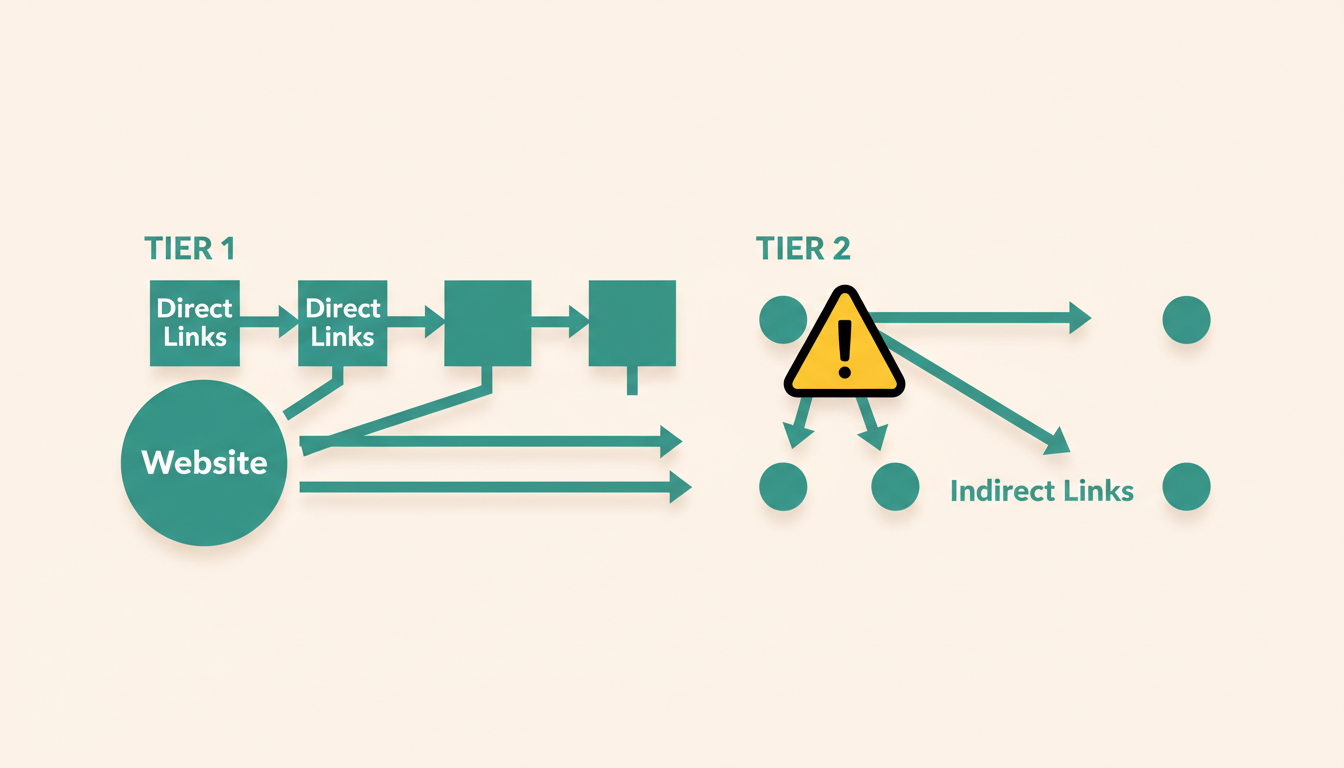
Tier 2 link building is the practice of acquiring backlinks that point to pages which already link to your site (tier 1), rather than directly to your target pages. It is an amplification tactic, not a substitute for primary link acquisition, and works best when tier 1 already has enough quality and volume to justify boosting.
I’ve tested tier 2 on a handful of client projects where tier 1 was solid but we needed an extra push. The results were mixed — sometimes it helped, sometimes it did nothing. What I’ve learned is that the line between smart amplification and spammy waste is razor-thin, and most guides undersell the risk.
At a glance
- Typical ROI
- Low to moderate (depends on tier 1 quality)
- Risk level
- Moderate (if done naturally)
- Best for
- Amplifying strong tier 1 links
- Time to see impact
- 2–6 months
How Tier 2 Link Building Works
Tier 2 link building follows a structured process. First, you identify or build strong tier 1 backlinks that point to your site — for example via manual link building or link earning through HARO-like platforms. Then you select the tier 1 pages worth amplifying based on their authority (DA 30+), relevance, and traffic potential. Next, you acquire tier 2 links through methods like guest posts, niche edits, or press mentions — you absolutely want to avoid link farms or anything you wouldn’t use for tier 1. Finally, you monitor the impact using backlink tracking tools.
The key decision criterion is whether the tier 1 page already has enough juice to make amplification worthwhile. If it only has 10 referring domains from low-authority sites, tier 2 is probably a waste of effort. I’ve seen people throw money at tier 2 for weak tier 1 and get nothing but a headache.
Effectiveness & Evidence
Most of what we know about tier 2 effectiveness comes from practitioner case studies and anecdotal evidence — not controlled experiments. That said, the patterns I’ve seen in my own projects align with what the guides say: tier 2 works best when tier 1 links are on domains with DA 30+, there are at least 100 tier 1 links, and the tier 2 links are relevant and built gradually (3–10 per month).
Google’s ranking factors increasingly prioritize direct (tier 1) links over tiered structures, as John Mueller has repeatedly stated. So while tier 2 can amplify, it’s never a replacement for building real, direct authority. One external guide I rely on is Andrew Linksmith’s tier 2 page, which emphasizes that tier 2 should only be used after tier 1 is established.
Risks & Google’s Stance
Google’s Webmaster Guidelines prohibit manipulative link schemes, and tier 2 link building can easily cross that line. The risks include manual penalties if tier 2 sources are spammy, algorithmic devaluation of your tier 1 links — yes, Google can simply ignore the boost — and wasted resources if tier 1 links are weak.
John Mueller has said that unnatural link patterns, including tiered structures, can trigger algorithmic filters. Safe execution requires natural-looking link velocity and diverse anchor texts. I recommend spacing out tier 2 acquisitions over 30–60 days and never exceeding 10 tier 2 links per tier 1 page in that window.
Best Tier 2 Link Sources
From my experience and what the guides say, these are the lower-risk tier 2 sources: guest posts on relevant blogs, niche edits on existing high-DA pages, press mentions in industry publications, and forum discussions with genuine context. Avoid web 2.0 properties like Blogger or Medium, private blog networks (PBNs), or any source you wouldn’t use for tier 1. The moment you compromise on relevance or editorial oversight, the risk spikes.
One guide from Soogle recommends using link insertions as a safe approach because they naturally fit into existing content. I’ve found this works well when the tier 1 page is itself a resource — like a comprehensive guide — that other site editors genuinely want to reference.
Comparison: Tier 1 vs Tier 2 vs Tier 3 Link Building
Tiered link building strategies vary in target, risk, and effectiveness. Here’s how they stack up:
Tier 2 sits in the middle — it can amplify, but the risk jumps quickly as you go deeper. I rarely recommend tier 3; the evidence for its effectiveness is thin, and the penalty risk is high.
When to Actually Use Tier 2 (and When to Skip)
In my judgment, tier 2 is only worth the effort when you have a solid tier 1 foundation and you’ve identified specific pages that are already performing well but could use a push. For example, if you have a tier 1 link from an industry publication that brings referral traffic, adding a few relevant tier 2 links to that article can amplify its authority and send more juice to your money page.
But skip tier 2 entirely if your tier 1 profile is thin, if you’re on a tight budget (tier 1 gives more bang for the buck), or if you can’t do it naturally. I’ve seen too many people burn money on tier 2 only to end up with a mess they have to clean with the disavow tool. As I wrote in my guide on tiered link building more broadly, the best approach is to treat tier 2 as a finishing move, not a core strategy.
If you’re curious about the broader link building landscape, check out my start page for the full picture.
Cost and Effort
There’s no fixed market price for tier 2 because it’s a tactic, not a product. The cost depends on how you acquire those links — earned organically (cheap but time-intensive), placed via outreach (content + labor), or bought through placements (variable, often $50–200 per guest post). The expensive part is usually human labor, content production, and outreach tooling, not the tier label itself. Compared to tier 1, tier 2 links typically cost 30–60% less, but that discount comes with higher risk if done poorly.
Tier 1 vs Tier 2 vs Tier 3 link building
Tiered link building strategies vary in target, risk, and effectiveness:
| Targets | Typical use | Risk | Effect on rankings | Relative effort |
|---|---|---|---|---|
| Tier 1Direct backlinks to your money page or key supporting page. | Your site | Primary authority building | Lowest of the three when done naturally | Direct impact on the page you want to rank |
| Tier 2Backlinks to tier 1 pages to amplify those first-tier links. | Pages that already link to you | Amplification / reinforcement | Moderate; spam risk rises fast | Indirect impact through tier 1 |
| Tier 3Backlinks to tier 2 pages, usually used for indexing or extra amplification in aggressive schemes. | Pages that link to tier 2 | Deep amplification / indexing support | Highest spam risk | Most indirect and least reliable |
Arguments for
- Amplifies the value of strong tier 1 links without needing new direct backlinks.
- Can be cheaper than repeatedly chasing high-quality tier 1 placements.
- Helps prioritize your best existing links for further investment.
- May improve referral traffic and visibility on tier 1 pages.
Arguments against
- High spam risk if tier 2 links are low-quality or irrelevant.
- Hard to measure impact cleanly due to indirect effects.
- Often lower ROI than acquiring more tier 1 links directly.
- Most guidance is anecdotal, lacking strong empirical evidence.
What the experts say
Google's algorithms are very good at recognizing artificial link structures, including tiered link building. If you try to manipulate PageRank through layers of links, you risk not only losing the value of those links but also triggering manual or algorithmic penalties.
What it costs (and why prices are unreliable)
There’s no fixed market price for tier 2 link building because it’s a tactic, not a product. Cost is driven by whether links are earned organically, placed via outreach, or bought through placements. In practice, DIY work can cost $0–50 per link in tooling plus your time, while paid placements range from $50–200 per guest post or niche edit. The expensive part is usually human labor, content production, and outreach tooling, not the tier label itself.
Frequently asked questions
Is tier 2 link building safe in 2026?
It carries moderate risk. Google’s algorithms have improved at detecting artificial link structures, but natural-looking tier 2 links (relevant, gradual acquisition) remain low-risk. I wouldn’t risk it if your site is already under manual review or has a history of penalties.
How many tier 2 links per tier 1 link?
3–10 over 30–60 days is safest. More than 15–20 per tier 1 link may trigger scrutiny. I’ve seen cleaner results when I stay under 8 per month per tier 1 target.
Should I disavow bad tier 2 links?
Yes — use Google’s Disavow Tool if tier 2 links come from spammy domains (DA below 10, irrelevant content). But only disavow if you see a manual action or a clear algorithmic dip; otherwise, Google may ignore them anyway.
Can tier 2 links replace tier 1?
No. Tier 2 is only an amplification tactic. Always prioritize direct backlinks first. If your tier 1 foundation is weak, tier 2 will not save you.
What’s the cost difference vs tier 1?
Tier 2 links typically cost 30–60% less than tier 1, but vary by source. For example, a guest post for tier 2 might be $50–200, whereas a similar tier 1 placement could be $150–500. But cheaper doesn’t mean better — lower cost often correlates with lower quality and higher risk.
What is tiered link building?
A layered link strategy where tier 1 points to your site, tier 2 points to tier 1, and tier 3 points to tier 2. The goal is to amplify the strongest links, but the tactic carries more spam risk as tiers go deeper. I cover the full framework in my tiered link building guide.
Sources
Every factual claim on this page is drawn from the following independent sources. Links open in a new tab.
- Andrew Linksmith — Tier 2 should be used after tier 1 is established; recommends prioritizing strong tier 1 pages and limiting dilution.
- Stan Ventures — Workflow for finding tier 2 targets, gradual cadence, anchor diversification, and selecting tier 1 pages to boost.
- Soogle — Common tier 2 tactics, relevance guidance, and content quality/natural placement advice.
- PressWhizz — Tiered-link cadence examples and use of web 2.0s, niche edits, Reddit threads, and press releases.
- Create and Grow — Research/outreach workflow, community sources, relevance, and avoiding spam profile issues.
- DoFollow — Recommendation to build a substantial tier 1 base first and choose non-spammy mid-authority targets.
- Search Royals — Tool stack for tier 2 campaigns and emphasis on genuine value, monitoring, and social amplification.
- WhitePress — Tier 2 links should still avoid spam and use relevant content with moderate authority.